How would you work with people who have different political viewpoints? Provide examples of how you have successfully done this in the past.
U.S. Senator

Kelly Tshibaka
Republican candidate for U.S. Senator
I have been effective at solving problems in government and maintaining my integrity simply by knowing the difference between my principles and my preferences. I am willing to compromise on preferences to get things done, but if you compromise on principles, you cannot be trusted.
For example, I drafted legislation to create the Intelligence Community Inspector General. It took me five years to get it through the approval of 17 agencies, the White House, both houses of Congress and both parties. I had to compromise on a lot of preferences along the way, but I did not compromise on the fundamental principles behind the legislation.
I look forward to engaging in wide-ranging discussions of policy with any member of the Senate, and to finding common ground wherever possible. But I will not compromise on what is right for Alaska.

Lisa Murkowski
Republican candidate for U.S. Senator
You cannot achieve common-sense solutions unless partisan politics is set aside. This is how I work to legislate and is the principle that has guided the bills I have drafted and ushered into law — including, most recently, the Energy Act of 2020; the 2021 bipartisan infrastructure package; a waiver of the Passenger Vessel Services Act to allow cruise ships to resume travel in 2021 after a near-shutdown of the tourism sector; and the reauthorization of the Violence Against Women Act earlier this year. I have worked to forge relationships built on respect with members on both sides of the aisle, which allows us to negotiate in good faith and create good policy that will endure for years to come.
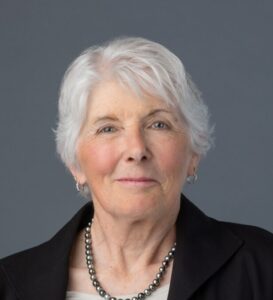
Patricia Chesbro
Democratic candidate for U.S. Senator
Leaders know that it is vital to hear and respect the viewpoints of those with whom you may initially disagree. As a principal and superintendent, I certainly found many moments in which my principles and perspectives did not align with those with whom I worked or led. However, I learned long ago that listening is the best tool a leader can use. Similarly, listening, questioning and finding common ground are keys to working with people whose political perspectives differ from mine. I currently serve on the Mat-Su Borough Planning Commission. The work of the commission often reveals different points of view about land use, whether it be a permit to mine gravel or a permit to cultivate marijuana. I listen carefully and make my decision based on the multiple sources of information that are presented. I believe we are all trying to achieve similar ends for our nation. We often differ in our approach to solving those solutions.