Current Residence
Wasilla
Age
61
Current and previous occupations
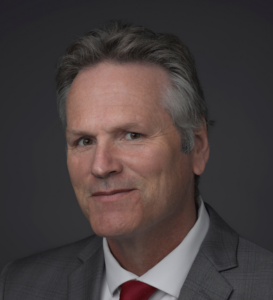
Political and government positions: Governor of Alaska (2018-present), state senator (2013-2018), Mat-Su Borough School Board member/president (2009-2012)
Business and professional positions: I was a public school teacher, principal and superintendent of schools in Northwest Alaska. I also served as the project manager for Alaska Teacher Mentor Project.
Educational background
Scranton (Pa.) Central High School, 1979. B.A., history, 1983, Misericordia University. Educational Endorsement Program, Misericordia University, 1984. Master’s in Education, University of Alaska Fairbanks, 1992.
Endorsements
Alaska Republican Party
Campaign Website
Running Mate
 Nancy Dahlstrom, 65, lives in Eagle River and most recently served as the commissioner of the Department of Corrections. Prior to that she was a consultant with WEKA, the executive director of the Alaska Workforce Investment Board and worked in the Parnell administration. She attended Wayland Baptist University, where she received an A.A. and B.S. in human services. Her master’s in organizational management is from Business University of LaVerne. She attended the U.S. Army War College in 2004.
Reasons for Running
Why are you running for governor and lt. governor?
I’m running because I want to build on the accomplishments of the past four years we’ve achieved despite natural disasters, a pandemic, an overreaching federal government and partisan opposition. I have a vision for Alaska that takes advantage of all its potential, from energy in every form to our global position as a logistics hub and as a proving ground for emerging technologies in everything from renewable energy to drones to micronuclear to hydrogen fuel. We’ve reduced our crime rates and increased our state troopers and Village Public Safety Officers. We’ve passed bipartisan education reform to ensure every student is proficient in reading by third grade. We’ve cleared the backlog of sexual assault kits and we’re collecting owed DNA. Except for education and public safety, we’ve cut the operating budget by 10% and we haven’t raised taxes. By increasing access to our abundant lands and waters, we can build food systems in Alaska that are secure and resilient to global supply chain disruptions. I believe in Alaska, I believe in Alaskans and I believe our best days are within reach. My vision for Alaska isn’t just for the next four years. My vision is for the next 50 years and beyond.
Working Together
How would you work with people who have different political viewpoints? Provide examples of how you have successfully done this in the past.
As the governor of all Alaskans, I’ve always worked with people who don’t agree with me on every political issue because there are many areas where we can find common ground. I’ve worked with Sen. Tom Begich to pass bipartisan education reform; I’ve worked with Rep. Geran Tarr on agricultural policy and updating our outdated sexual assault laws; and I agree with Sen. Bill Wielechowski that the PFD should be protected through a constitutional amendment by a vote of the people. Alaska is a unique state in that the “R” or the “D” next to a politician’s name doesn’t always tell you where a politician may come down on an issue. It has been an honor to work with many different legislators who represent Alaskans first and foremost, and not a political party.
Salmon
What steps would you take to help restore depleted salmon populations and ensure salmon runs remain strong in Alaska?
One of the foundations for statehood in Alaska was protecting our salmon runs, and I take that responsibility seriously as governor. Harvesting our wild salmon is an Alaskan way of life, and the restrictions on salmon fishing on the Yukon and Kuskokwim rivers in recent years must be addressed. That’s why I formed a Bycatch Review Task Force to evaluate all the available science and deliver management recommendations that will address both man-made and natural causes impacting our salmon runs. The life cycle and range of chum and chinook salmon span years and thousands of miles from fresh water to the ocean, and no magic bullet can solve this problem in the near term. We will continue to put every resource available into the research of salmon habitat and how we can enhance productivity. We will take every measure necessary to ensure that man-made impacts such as bycatch are not negatively impacting Alaskan salmon runs.
State Budget Issues
How will you balance the state’s budget?
The budget is balanced, and we have a surplus that will put billions of dollars into savings for the Constitutional Budget Reserve, the Higher Education Fund and K-12.
PFD
How should Alaska Permanent Fund dividends be set?
Our state Legislature should either follow the law, or change it. I’ve proposed a 50-50 split of the Percent of Market Value draw that would go through a constitutional amendment in line with former Gov. Jay Hammond’s philosophy that the state government should never take more than half of the earnings from the Permanent Fund. My 50-50 plan is a starting point that would need to be approved by the people. If the people reject it, that should inform the decisions of the Legislature and the governor going forward. We can’t ignore the people when it comes to the PFD. There is no solution to the PFD issue without giving the people a voice. A PFD that consists of only what’s left over after the government takes its piece will continue to paralyze our politics. We must set a formula that takes Juneau out of the equation once and for all, and I believe that will only happen when we listen to the people of Alaska.
Campaign Finance
What, if anything, needs to change about how candidates and elections are funded?
Campaign funding rules are the responsibility of the Legislature, and I’ll work with members to ensure we have transparency in the process, in line with precedents and the 9th Circuit Court of Appeals ruling. The U.S. Supreme Court has ruled that First Amendment rights to speech and assembly apply to campaign donations, and I believe every American can exercise those rights as long as the contributions are disclosed.
Addressing Climate Change
What will you do as governor to address climate change?
As long as billions of people on the planet are working to lift themselves out of poverty, including right here in Alaska, demand for oil and natural gas will continue for decades. Alaska does not flare or vent natural gas to produce oil, and the Alaska LNG Project will reduce carbon emissions by 77 million tons or more over the project’s life, according to the U.S. Department of Energy. We produce oil and gas with a lower carbon footprint than virtually any other jurisdiction on the planet, which means that stopping resource production in Alaska will only push it to other places with fewer environmental safeguards. That said, Alaska will be a leader in clean energy in all its forms, from established sources such as wind or solar or emerging technologies in tidal or micronuclear. We already produce more than 30% of our utility-scale electric power through renewables, from Kodiak to north of the Arctic Circle at Kotzebue. I’m committed to doing even more. I’ve introduced legislation for a renewable portfolio standard and a green bank. The Alaska Energy Authority is currently working with the Railbelt utilities to upgrade our transmission lines to add more power from independent renewable power producers and the state-owned Bradley Lake hydro plant.
Abortion Access
Now that Roe v. Wade has been overturned, what, if any, legal changes would you propose in Alaska with regard to access to abortion?
Alaska was one of four states where abortion was legal before the Roe v. Wade decision, so the overturning of Roe does not have an immediate impact here. The fatal flaw of the Roe decision was imposing a nationwide ruling that wasn’t rooted in sound legal ground under the U.S. Constitution, which the late Justice Ruth Bader Ginsburg noted. By returning the issue to the states where it belongs, Alaskans have the freedom to address this issue as they see fit. I’ve stated that I would introduce an amendment to let the people vote on the right to abortion through a constitutional amendment. I am personally pro life, and I will respect the outcome of that vote regardless of my personal beliefs.
Child Care Access
What will you do to improve child care access and affordability in Alaska?
We know that access to child care was an issue in Alaska before the pandemic, and that challenge has only become more significant since then. In 2020, the state developed its Early Childhood Alaska Strategic Plan that identified goals to advance early childhood issues, including child care and education and creating a larger child care workforce. In addition, we have completed our spending plan using pandemic relief funds that will provide $95 million in resources in a comprehensive effort to increase our child care capacity and accessibility through facilities, workforce and aid to qualified families. Anyone interested in learning more about our child care plans can visit the Division of Public Assistance page hosted by the Alaska Department of Health. We have also entered into a partnership between the health department, thread, and the Rasmuson Foundation on a stakeholder-driven initiative to improve child care access that will begin convening this fall to develop a strategic plan to achieve these shared goals. The health department is providing funding and policy team resources to this joint effort.
Inter-governmental Relationships with Tribes
How will you facilitate inter-governmental relationships with Alaska’s 229 sovereign tribes?
It was an honor to sign HB 123 earlier this year, recognizing Alaska’s Tribes for their role in our state in the past, present and future. We currently have relations with Alaska’s Tribes through the Child Welfare Compact, and I signed SB 34 this year that will allow for State-Tribal compact schools. As someone who lived in rural Alaska for nearly two decades, where I met my wife from Noorvik and raised our three daughters, I have the utmost respect for our Tribes and their sovereignty. During the pandemic, my administration collaborated with our Tribes and communities to ensure there was no repeat of the devastation seen in 1918. Working together, we protected our most vulnerable by maximizing local governance under the state constitution. Any governor must have a good working relationship with our Tribes, and I will continue to work with them to achieve the best outcomes for all Alaskans.
Other issues
What other important issue would you like to discuss?
Along with education reform and fighting for the PFD, I ran for office in 2018 on a pledge to protect public safety. I took office during a historic crime wave, with record levels of property crime and murder in our largest city, state trooper posts were being closed around the state, and VPSO numbers had fallen from more than 100 under Gov. Parnell to just 45 when I took over from Gov. Walker. In my first State of the State address, I declared war on criminals and a few months later we repealed the catch-and-release policies of SB 91. In the next two years our crime rates fell by 30% according to the FBI, and we’ve put a record amount of resources into public safety under each of my budgets.
(Editor’s note: Dunleavy signed legislation repealing and replacing Senate Bill 91 in July 2019. There was a 30.9% decrease in overall crime from 2019 to 2021 as reported by the Alaska Department of Public Safety using FBI data. This follows a downward trend in crime rates that started in 2018, before the repeal of SB 91. The decrease in crime rates cited here also coincides with the COVID-19 pandemic.)
While Lower 48 jurisdictions are struggling to recruit police officers, we will graduate two full academies this year to keep growing our ranks of troopers and VPSOs. We’ve authorized six major crimes investigators for our rural hub trooper posts in Bethel, Nome, Kotzebue and Dillingham; we’ve added Tribal liaisons; and as part of my People First initiatives we’ve created the first dedicated investigator into missing and murdered Indigenous persons. We’re collecting owed DNA, we cleared the inexcusable backlog of sexual assault kits, and we instituted policies to prevent such a backlog from ever happening again. We fixed our outdated consent laws this year, but much work remains to be done to protect our most vulnerable and I take that responsibility seriously as governor.
Ranked Choice Voting
Yes or no, do you support maintaining open primaries and ranked choice voting in Alaska?
Alaskans voted for this law, and we must give it a chance and see it through a full election cycle before determining if changes are necessary. I would ultimately need to see any proposed bill after the legislative process, and decide when it is on my desk whether I would support or oppose any changes.
Constitutional Convention
Yes or no, do you support a constitutional convention?
Our Framers ensured that the people of Alaska would regularly get a voice if they want any changes to the Constitution. I trust the people of Alaska, and will respect either decision they make. I disagree with the argument being made that there is something to fear from a convention. There is a clear process for a convention laid out in the Constitution, including the requirement that any changes ultimately must be ratified by the people.
(Editor’s note: In mid-October, Dunleavy confirmed that he will vote yes.)
Taxes
Yes or no, would you consider new taxes as part of a complete balanced budget plan?
No. The budget is balanced, and any new taxes should be subject to approval by the people.
Climate Change
Yes or no, do you think climate change is affected by human activities?
There’s no doubt climate change is happening in Alaska. Human activities can contribute to climate change, but Alaska is not the problem and we should not foreclose on economic opportunities here that will only shift resource development overseas where in many cases the environment is not respected the way we do. Alaska can and will be a leader in clean energy and reducing global carbon emissions.
Campaign Contributions
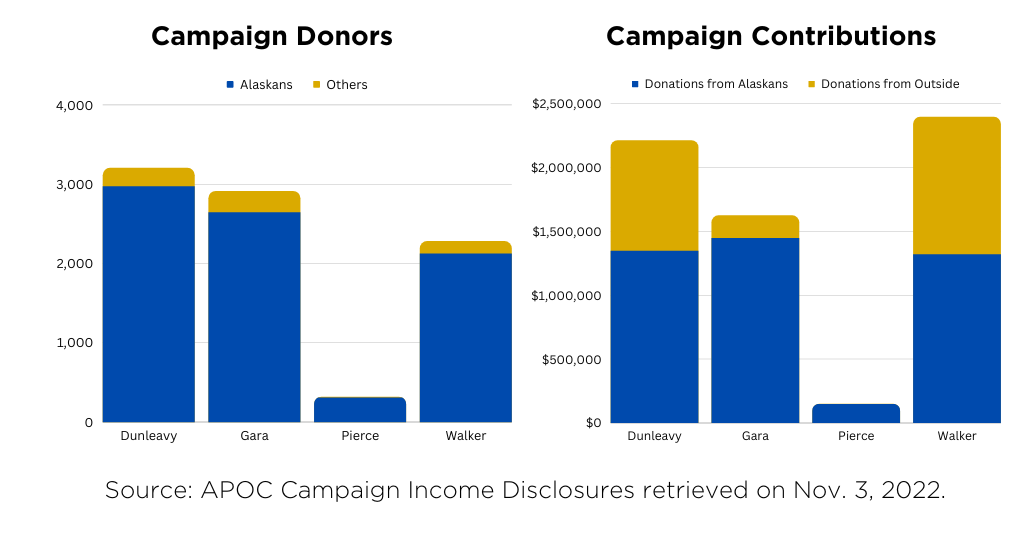
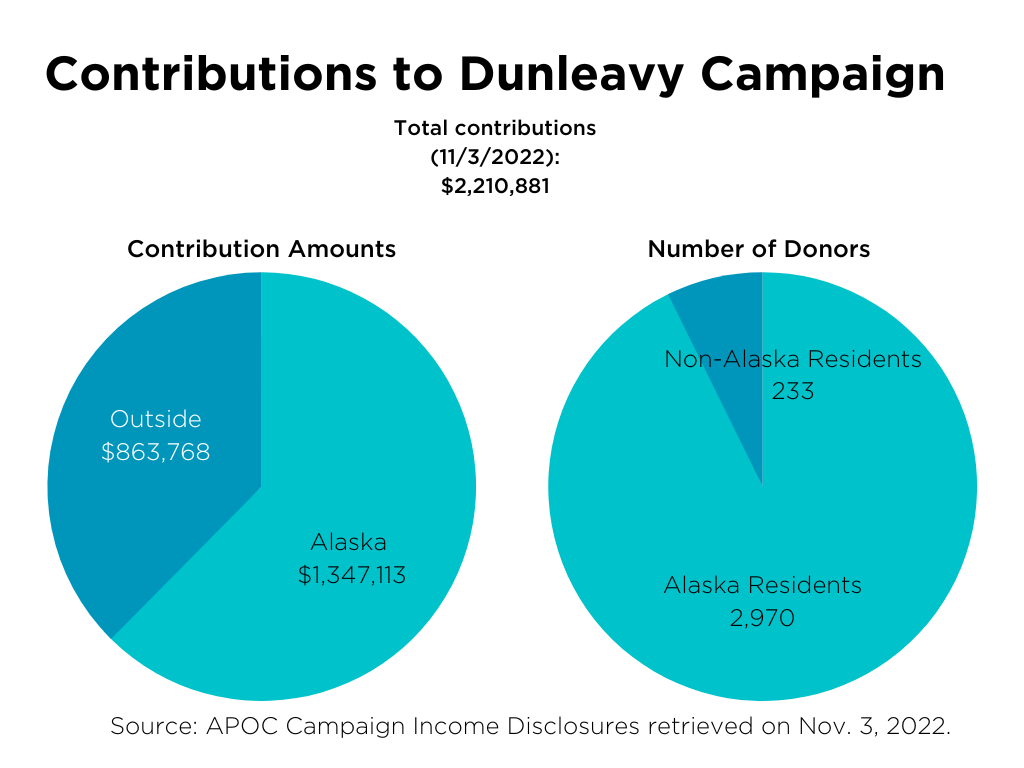
Dunleavy’s largest donors are Francis Dunleavy, the candidate’s brother from Houston, Texas, who gave $300,000. Robert Penney, a developer from Anchorage donated $200,000. Armand Brachman, who the campaign describes as “a hunting and fishing buddy” from Corcoran, Minnesota gave $100,000. He also received $50,000 each from GCI’s CEO Ron Duncan, GCI’s President and COO Greg Chapados, and Texas-based investor Darwin Deason. Terry Urbanczyk, a contractor in Texas with Urban Concrete, gave $51,500.
Data drawn from APOC Campaign Disclosure Reports using all income disclosures for report year 2022 until Nov. 3, 2022.
Independent Expenditures are things like ad buys or mailers sent out by organizations that are not associated with the campaigns and are forbidden by law from working with campaigns. A Stronger Alaska has spent $441,107 in support of Dunleavy as of Nov. 3, 2022. They spent an additional $134,306 opposing Gara and Walker. The Alaska Correctional Officers Association spent $10,578 in support of Dunleavy.