Current Residence
Anchorage
Age
59
Current and previous occupations
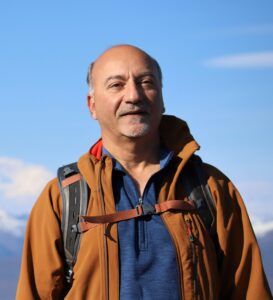
Former Alaska legislator; former Alaska assistant attorney general on civil prosecution of Exxon following the Exxon Valdez oil spill; currently outdoor and fishing writer and consultant, and restaurant part-owner.
Educational background
Harvard Law School, J.D. with honors; Boston University, B..A. with honors; Freeport High School.
Voting Record
Alaska State Legislature (2003-2018)
Campaign Website
Running Mate
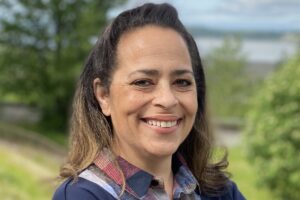 Jessica Cook, 51, is a teacher who lives in Palmer. She graduated from Chugiak High School before getting her Bachelor of Arts in Education from Coastal Carolina University. She has a Master of Science in Education from Wilkes University and a Master of Arts in Teaching from Grand Canyon University.
Reasons for Running
Why are you running for governor and lt. governor?
Alaskans deserve a future of better schools, good paying jobs and true, equal opportunity to succeed again. Twenty thousand more people have left Alaska than moved here under Gov. Dunleavy, because they see no future for themselves or future work for their children, and no commitment to public education.
As the only pro-choice candidate for governor, I want to make sure we protect reproductive freedom, and appoint judges who won’t reverse Alaska’s pro-choice caselaw. And I believe in equal rights, not government interference in decisions about whom one is allowed to love.
As someone who grew up in foster care, I believe everyone deserves the chance to succeed. Instead we have a state with struggling schools, years of austerity construction and community infrastructure budgets. That’s left people out of needed work, and caused many Alaskans to move to other states with their job skills.
This governor has shown a lack of commitment to protect our fish. His poor policies range from his misguided support of a toxic Pebble mine, to Outside factory trawlers the governor’s nominees have allowed to dump over 1,000 tons of halibut and over 500,000 chum dead, just in the Bering Sea. He’s given Outside corporations a priority over Alaska’s fish. That excessive waste needs to be reversed.
Working Together
How would you work with people who have different political viewpoints? Provide examples of how you have successfully done this in the past.
I believe in working across party lines, and always have. Policy and people take priority over political parties. I’ve worked across party lines, passing the largest reform for foster youth to succeed in life in state history, in 2018. I did that by passing it through a Republican-led Senate. Every senator stood up one by one to co-sponsor that legislation.
You have to build relationships with people, understand the fair goals of other legislators, and work together to find common ground. This governor says he represents only those who voted for him. I believe you represent everyone, from every corner of this state. I’ve passed substantial legislation and policy as a legislator, by working across party lines, and convincing Republicans and Democrats to support good policy, and to ignore party affiliation.
Salmon
What steps would you take to help restore depleted salmon populations and ensure salmon runs remain strong in Alaska?
We have to make sure we move ahead with responsible development, but not irresponsible development like the Pebble mine. Pebble threatens the world’s greatest remaining salmon runs. I oppose that project. Gov. Dunleavy supports it and has sued on behalf of its Canadian mine owners.
I don’t believe in trading mines for fish, but do support responsible mining, and Alaska has a current history of operating mines that is responsible.
We have to stop the excessive killing of fish by Outside factory trawlers, which the governor’s nominees have allowed. Killing over 1,000 tons of halibut and 500,000 chum salmon in just the Bering Sea is irresponsible.
We have to act to continue to protect the clean water needed for vibrant fisheries. I believe in building renewable energy across the state to help stem global warming, which is harming our fisheries. And we have to do the fishery studies we need to, to protect fish and adopt smart management.
We should also listen to those who fish for a living, including subsistence fishermen in smaller communities, as we adopt smart policy.
(Editor’s note: The governor is responsible for nominating five of the 11 voting members of the North Pacific Fishery Management Council, which regulates fishery bycatch. The commissioner of the Alaska Department of Fish and Game is also a voting member. They make management decisions based on 10 national standards. They have taken recent action on halibut bycatch and make requests of industry to informally address bycatch, such as this one regarding chum salmon.)
State Budget Issues
How will you balance the state’s budget?
We need to stop turning people against each other. Except for this year’s Russian invasion of Ukraine, which has led to one year of higher oil revenue, this state has been fighting with constant deficits, and harming schools, public safety, jobs and the economy with excessive cuts.
We need to stop making people fight each other about needed priorities. This state has cut the budget almost constantly since 2014. Gov. Dunleavy attempted an irresponsible, devastative quarter-billion-dollar cut to public education in 2019, and emptying our $1 billion power cost reduction fund (PCE), as his “plan.” His education cut would have fired over 2,800 teachers and educators.
With little revenue, he has forced people to fight over the crumbs, and between schools, construction and infrastructure jobs, job training and a university, a strong PFD and needed renewable energy projects.
With a fair share for our oil, by ending $1.2 billion in oil company tax credit subsidies the state gives to the wealthiest oil companies in the world, we could fund all of Alaska’s priorities, and have a strong PFD without harming schools, jobs, a Marine Highway, renewable energy project construction and the things that build a future.
We should be equal partners with our oil industry, but have become junior partners. I voted against these subsidies, and Gov. Dunleavy voted for them when we were legislators in 2013.
PFD
How should Alaska Permanent Fund dividends be set?
We have to end the 10-year battle over the PFD, and recognize many people rely on it, but also recognize we can’t make people fight between a PFD, schools, renewable energy, jobs and the things that create a future.
With a fair share for our oil, we’d be able to easily fund a strong PFD of over $2,200 that grows annually, and that gets paid, not just falsely promised. By ending $1.2 billion in oil company subsidies, we’d have the funds for a strong PFD. I supported this year’s PFD and energy relief check added to the PFD, as we had high oil revenue because of Russia’s unprovoked invasion of Ukraine. But that’s not a fiscal plan or the future.
Without oil revenue in his first three years, this governor made false PFD promises that came with no funding, resulting in an average $1,230 PFD from 2019-2021. Gov. Dunleavy voted for the $1,000 vetoed PFD in 2016. He doesn’t truly believe in a strong PFD, or he’d propose the funding for it. I’d fund a strong PFD, and not give away our oil wealth as he has. Under his plan we’ll be back to cuts to everything, and a $1,200 PFD once Russia’s invasion of Ukraine ends.
Campaign Finance
What, if anything, needs to change about how candidates and elections are funded?
I believe in campaign donation limits, and have voted for them. Gov. Dunleavy admits he believes outsiders should be able to donate as much as they want with no dollar limits, and purposely chose not to appeal a ruling against our voter initiative-passed $500 donation limit. Because of him, we are one of two states that allows unlimited campaign donations, and that is terrible policy.
Addressing Climate Change
What will you do as governor to address climate change?
I have a record fighting climate change while allowing responsible development. I voted for our Renewable Energy Fund, which put $50 million annually into helping startup renewable energy projects across the state. Gov. Dunleavy hasn’t funded that amount once.
I co-wrote Alaska’s only rules requiring state, school and university buildings to be built to cost-effective energy efficiency rules, reducing the amount of greenhouse gas emissions.
I believe in using our oil wealth to help build renewable energy projects across rural and urban Alaska. Renewable energy helps stem global warming, lowers energy costs and puts people to work.
To more forward, we need the revenue to do this, and ending Alaska oil company subsidies would help us move forward on a better, cleaner, lower-cost energy policy.
Abortion Access
Now that Roe v. Wade has been overturned, what, if any, legal changes would you propose in Alaska with regard to access to abortion?
I’m the only pro-choice candidate in this race, with the only record of supporting choice among the candidates. It’s why I have the endorsement of Planned Parenthood Alliance Advocates (Planned Parenthood’s endorsing arm). I do respect that Bill Walker says he will try to put his beliefs against choice to the side this time as governor. Given Gov. Dunleavy’s promise to try to eliminate the right to choose with a constitutional amendment, Walker will get my second ranking in November.
I cannot vote for a candidate who promises to take away the right to choose, and who, like Gov. Dunleavy, opposes abortion even in cases of rape and incest.
I’m the only candidate who has said I’ll do what’s truly needed to protect choice — ask future judges if they will uphold Alaska’s case law protecting the right to choose. That’s what keeps choice legal in Alaska. Alaskans can lose our freedom on this and other issues just as they did at the federal level — with state Supreme Court justices who reverse our pro-choice case law.
I’ll veto legislation that rolls back the right to choose, and work to expand safe contraception to a year-long prescription.
Child Care Access
What will you do to improve child care access and affordability in Alaska?
Other states have moved forward with models that help, and this governor, instead, just vetoed $4 million in child care assistance this summer. We should work on choosing the best, most effective of those plans. Other states, and the City of Juneau, have programs that, at no cost to providers, help train child care workers to get the education they need to be better providers, and help supplement the wages of trained child care workers (Wage$ in Tennessee for example). Colorado helps reduce the cost of care through aid to help pay for child care facility rent and fixed costs.
We also need quality universal pre-K, not just the partial pre-K we have. That helps families, and helps children enter school ready to read and ready to learn. I’ve proposed universal pre-K as a legislator, and it needs to be passed.
Inter-governmental Relationships with Tribes
How will you facilitate inter-governmental relationships with Alaska’s 229 sovereign tribes?
Tribal compacting works, and I have supported it. As a legislator I helped this by saying family members should be consulted before a child is placed in a strange foster home, and tribal entities know the good relative placements in a child’s community. We have contracted with tribes to help identify healthy relative placements.
We should adopt an effective version of the federal tribal consultation practice of public notice and involvement on projects that affect tribal lands and members.
Other issues
What other important issue would you like to discuss?
We should solve the problems this governor has been silent on. We need fair school funding and teacher, police, firefighter and public servant benefits, so we can attract and retain the best professionals. Right now teachers, police, child protection workers, Marine Highway workers and firefighters just train in Alaska, at our cost, and then move to one of the 49 states with better pay, and that offer attractive pension benefits.
I’m the only candidate who, when in office, proposed keeping school, including school busing funds up with the most of inflation and who proposed reinstating a cost-effective pension plan. Today we are over $100 behind inflation on school funding just since 2014.
I voted against the end of public servant pensions, knowing it would hurt our ability to hire and retain teachers, police and other workers. I’m the only candidate who has tried to add them back.
We also need to get police to the dozens of rural communities that have none. That’s 19th century law enforcement, and is dangerous.
And we have to solve Alaska’s major shortage of mental health, counseling, children’s mental health and substance abuse treatment professionals. That is harming lives.
Campaign Contributions
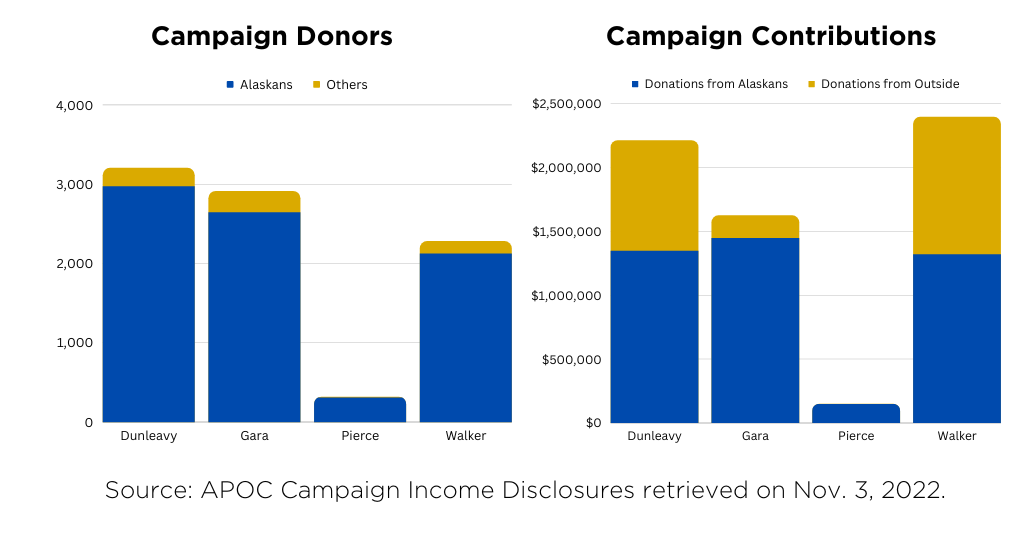
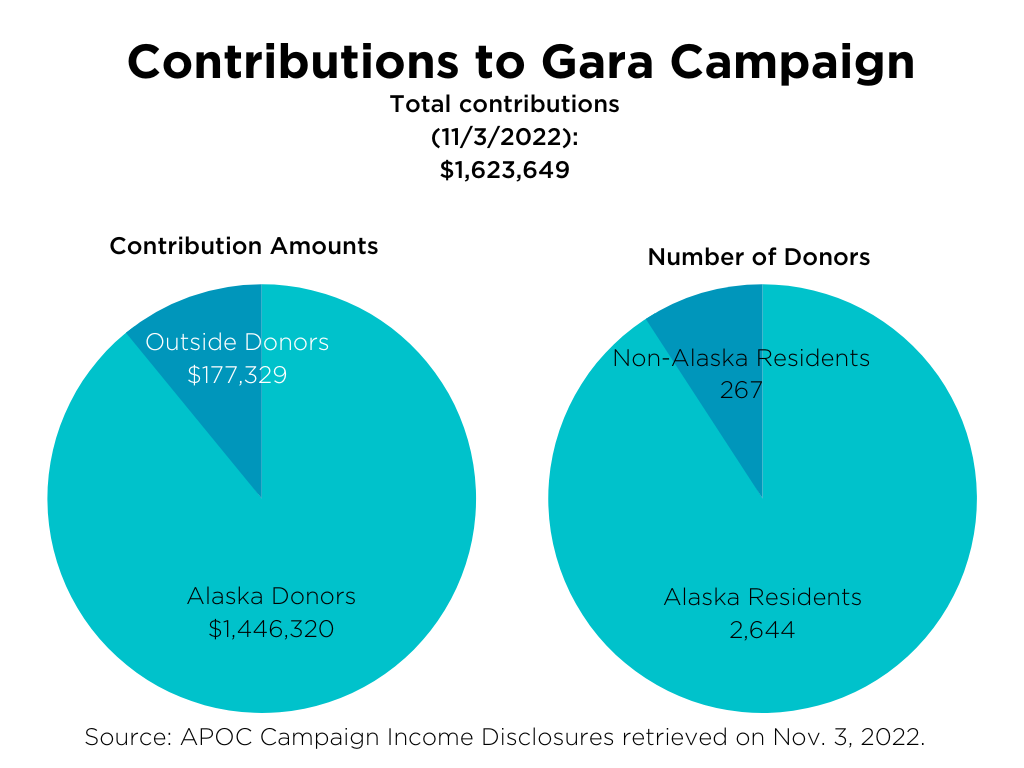
Gara’s largest donors are himself, with a donation of $25,514, and independent Anchorage-based consultant Mark Foster gave $25,500. Anchorage attorney Robin Brena gave $19,500.
Data drawn from APOC Campaign Disclosure Reports using all income disclosures for report year 2022 until Nov. 3, 2022.
Independent Expenditures are things like ad buys or mailers sent out by organizations that are not associated with the campaigns and are forbidden by law from working with campaigns. Alaska March On has spent $51 in support of Gara and the ENSTAR Employee PAC spent $250 as of Nov. 3, 2022.